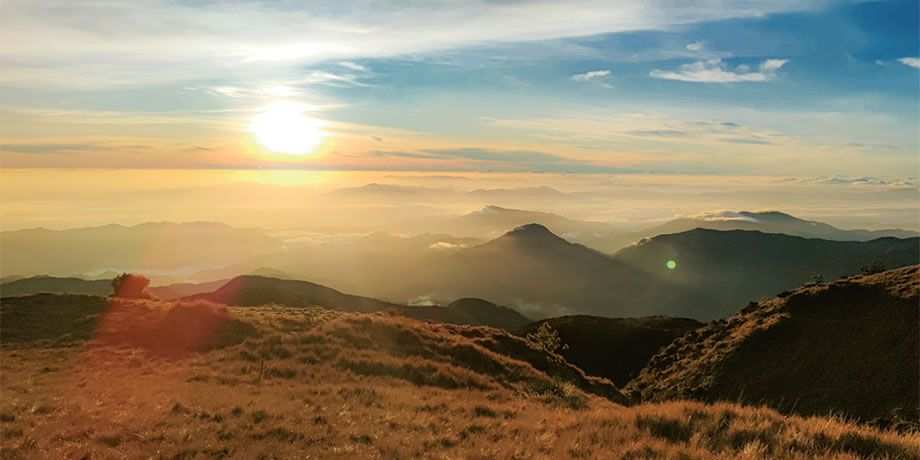
Last year, in 2025, a major controversy emerged surrounding a proposed wind energy project near Mount Banahaw (in the Philippines), affecting communities in Laguna and Quezon Province. Local residents, together with environmental groups such as the Save Bundok Banahaw Network, and other non-government organizations (NGO’s) strongly opposed the project due to serious ecological, cultural, and spiritual concerns.
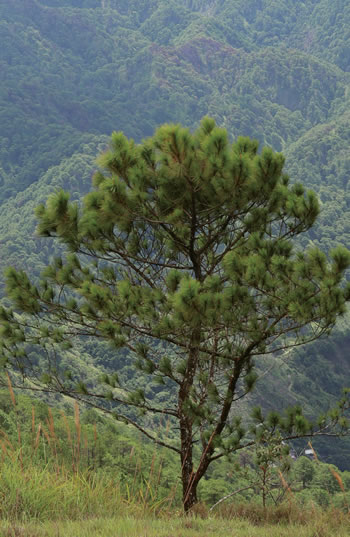 One of the primary issues raised was the encroachment on protected areas. Critics pointed out that 28 of the 38 planned wind turbines would be situated within a three-kilometer (1.8 mile) radius of the Mounts Banahaw and San Cristobal Protected Landscape. Many fear that this proximity threatens the integrity of the conservation zone.
Beyond environmental concerns, Mount Banahaw holds deep sacred and cultural significance. It is revered as a holy mountain by numerous spiritual groups. Industrializing the area is seen by many as a desecration of its spiritual and religious heritage. Years ago, I personally experienced the mountain’s sacred character when I joined religious sisters and priests from nine congregations in an exposure program on Filipino spirituality at Ciudad Mistica de Dios (The Mystical City of God). That encounter deepened my reverence for the mountain as a place of prayer, pilgrimage, and spiritual renewal.
There are also serious environmental fears. Construction activities could lead to deforestation in virgin forest areas, increasing the risk of soil erosion and landslides, and endangering watersheds that supply water to communities in Laguna and Quezon. Having had a brief mission experience in Laguna a few years ago, I witnessed firsthand how deeply communities depend on these natural resources for daily life.
This situation reflects what many describe as a “green versus green” conflict. While the wind energy project aligns with the national goal of achieving 35% renewable energy by 2030, activists argue that renewable development must not come at the cost of protected ecosystems. They caution against what they call “development aggression,” insisting that climate solutions should not sacrifice biodiversity and sacred landscapes.
The proposed project spans approximately 4,536 hectares of land, with 38 wind turbines planned across 10 barangays. One of these, Barangay Bukal Ilaya—where I recently participated in a tree planting activity—has been specifically cited as a core area for the proposed construction.
In light of these realities, I volunteered for the tree-planting initiative as a concrete response to our chapter directive: that we continue to educate and update ourselves about the current climate and ecological crisis, while exploring meaningful ways to act in our journey of ecological conversion through prayer, lifestyle, and advocacy.
Our journey to the foot of Mount Banahaw with the organizers and fellow volunteers was originally scheduled for December 2025. However, persistent rains delayed our mission. It was a gentle reminder that creation moves according to its own rhythm—that the mountain, not our calendars, sets the schedule.
On February 14, 2026, beneath heavy rain, we gathered for early Mass at the Parish of Our Lady of Perpetual Help in Tayabas, Quezon. That morning, we became more than volunteers; we became stewards of creation, responding to the call of Pope Francis in Laudato Si’ to care for our common home.
In his encyclical, Pope Francis reminds us, “The earth herself, burdened and laid waste, is among the most abandoned and maltreated of our poor” (LS 2). His words resonated with us deeply as we stood at the foot of a mountain long regarded as sacred.
In his homily, the priest emphasized that Mount Banahaw is not merely land to be utilized but a gift to be protected. He acknowledged the concerns of communities and organizations in Quezon Province opposing the proposed 247 MW Banahaw Wind Power Project. For many, the issue goes beyond development; it concerns ecological integrity and spiritual heritage.
Around 300 volunteers came from Laguna, Batangas, Cavite, Quezon, and Manila to plant indigenous tree species in Barangay Bukal Ilaya. These trees do more than absorb carbon; they help prevent flash floods in the Quezon and Laguna lowlands and restore the mountain’s watershed. As Laudato Si’ teaches, “Everything is connected.” (LS 91) What happens in the uplands directly affects the lives of those in the lowlands.
The encyclical also calls us to an “ecological conversion,” inviting us to recognize that “living our vocation to be protectors of God’s handiwork is essential to a life of virtue.” (LS 217) Each seedling we planted became a concrete expression of that vocation.
Just before the final blessing, the rain stopped. The seedlings were blessed, and we shared a simple local porridge before ascending the slopes.
Another day, we were welcomed through a traditional lambanog ritual. A young woman offered a glass with the words “Na’ay po,” inviting us into the sacredness of the land. Our collective response, “Pakinabangan po,” was both gratitude and promise—that our labor would bear fruit for both community and ecosystem. In that sacred exchange, faith and culture intertwined, echoing the spirit of Laudato Si’ which calls us to respect both creation and the wisdom of local communities.
Mount Banahaw is a protected landscape, yet its true protection depends on people willing to walk its trails with intention and reverence. Pope Francis reminds us, “We are not God. The earth was here before us and it has been given to us.” (LS 67) This humility must guide all decisions concerning its future.
As the seedlings take root, so too does our resolve. We have been nourished by the land; now it is our turn to ensure that it remains pakinabangan—life-giving and blessed—for generations to come. In caring for the mountain, we answer the urgent invitation of Laudato Si’: to hear both the cry of the poor, and to respond with faith in action.
Columban Sister Virginia Mozo lives and works in the Philippines.
