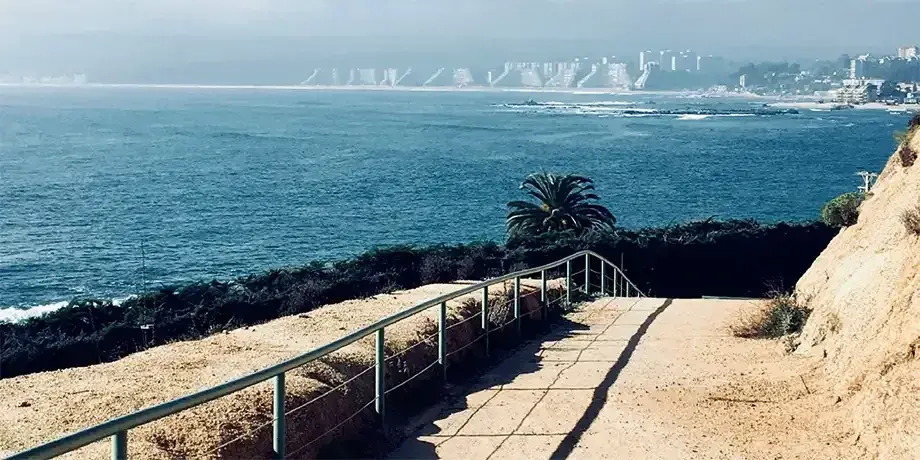
Lydio Mangao from the Philippines and Juan Pablo Ro from Korea are newly arrived Columban seminarians participating in their “First Mission Assignment” (FMA) in Chile. It was part of their orientation program and conducted at at the Columban house in the seaside town of Algarrobo, on the Pacific Ocean, located 75 miles southwest of Santiago.
Because of its location, the Columban house at Algarrobo serves as a center for understanding the rich biodiversity of the local area and the various threats it faces. The defining feature of the ocean at Algarrobo, as well as along the entire coast of Chile, Peru, Ecuador, and extending to the Galapagos Islands, is the Humboldt Current. This current carries cold, lowsalinity water from the sub-Antarctic, flowing offshore up the west coast of South America, making it one of the richest marine ecosystems on Earth. It also significantly cools the climates of Chile, Peru, and Ecuador.
In addition to being a center for understanding the local area’s biodiversity, the Columban house also serves as a venue for retreats, courses, formation, various meetings, prayer, and rest.
As the Columban house overlooks the Pacific Ocean, it wasn’t long before Lydio and Juan Pablo spotted a large pod of Risso dolphins swimming offshore. Bottlenose dolphins can also be seen at Algarrobo.
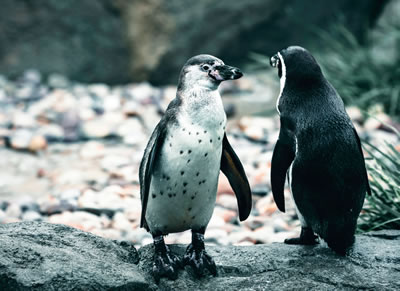
Just a short walk from the Columban house, you will find the “lslote Pajaro Niño,” a small offshore island that was declared a Nature Sanctuary in 1978. The island is home to separate colonies of over 2,000 Humboldt and Magellan penguins. It is the northernmost limit for Magellan penguins.
Sadly, Humboldt penguins have been listed as endangered by the International Union for the Conservation of Nature (IUCN). Since 2013, there has been a significant decline in the number of Humboldt penguins on the island.
Also present on “lslote Pajaro Nino” is a colony of Chungungos, or Marine Nutrias (otters) (Lontra feline), which are native to the coasts of Chile and Peru. Unfortunately, the IUCN has placed Chungungos on the red list of endangered species as well. The island is also home to over twenty species of migratory birds.
Both the penguin colonies and the Chungungo colony can be observed using binoculars from the walking track around the point, which is a short distance from the Columban house. At this very spot, overlooking the island, developers have proposed building a complex of three tall apartment buildings. Residents are leading an energetic campaign to block this development.
 In recent years, the biodiversity of Islote Pajaro Nino has significantly declined due to an increase in recreational activities from the nearby yacht club, including boating and water sports. Algarrobo is widely regarded as “The Nautical Capital of Chile,” known for a diverse range of water sports such as sailing, surfing, and diving. Overdevelopment is also a serious threat to biodiversity. A large apartment complex in another area of Algarrobo boasts the second-longest swimming pool in the world, exceeding half a mile in length.
Just a short walk from the Columban house is a small bay featuring the beautiful beaches of Canelillo and Canelo. Despite the very cold waters from the Humboldt Current, Lydio managed a brief swim here while other swimmers opted for wetsuits.
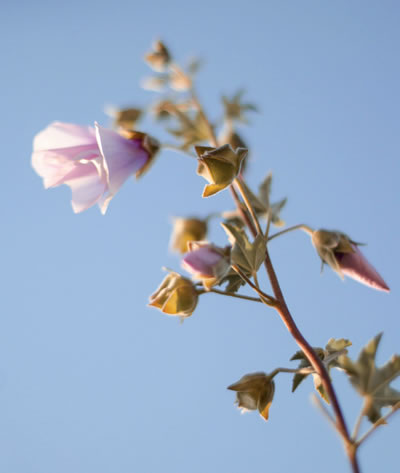
Following on from the two beaches, one walks for 15 minutes along a dirt track with a rocky sea front on one side and steep slopes on the other. In springtime, the slopes burst with color from various native Chilean wildflowers. During the orientation program, the Quiscos, a type of cactus (Echinopsis chilensis), were beginning to bloom, as was the Chagual (Puya Chilensis), with its large flowering stalks poised to open.
Amidst the flowers, it’s easy to spot two multi-colored species of beautiful native Chilean lizards, members of the genus Liolaemus, which is the most common and diverse genus in Chile. Meanwhile, sea eagles soar overhead. Local ecological groups continue to battle against developers wanting to build high-rise apartments with sea views on these slopes.
At the end of the track, you arrive at a 30-metre-high single granite rock known as Peñablanca, which becomes an island at high tide. It was declared a nature sanctuary in 1982. On this guano-covered rock, hundreds of marine birds, including migratory birds from the northern hemisphere, nest and rest. There are also pelicans, various species of cormorants, several types of gulls, and many other species.
On the southern side of the rock lies a colony of sea lions. From the shore, you can look across to the colony and hear their calls. Chungungos also frequent the rock. Numerous species of algae thrive in the waters surrounding the rock and are washed up at high tide. Beautiful orange, red, and yellow lichens blanket the rocks above the high tide mark.
Returning to the Columban house, one can walk for 10 minutes down to Fossils Beach, considered one of the most important, if not the most important, paleontological sites in Chile. This beach is the only area in the entire South American Pacific region with rocks that are 70 million years old. Here, a significant quantity of animal, mollusc, and plant fossils have been discovered at low tide. Notably, in April 2024, the relatively intact remains of a 23-foot-long Elasmosaurus, dating back 70 million years, were found. These dinosaurs thrived during the Jurassic era. Once again, this area faces threats from developers who want to construct a wharf across the rocks to promote tourism. Local groups are actively opposing this proposal.
The visit to Algarrobo provided Columban seminarians Juan Pablo and Lydio with a glimpse of the immensely rich yet fragile biodiversity found in this local area. It also demonstrated how easily this biodiversity is threatened by human activities, particularly economic interests.
Columban Fr. Daniel Harding lives and works in Chile.
